Extracting Customer Objections for Ecom Ad Messaging
By Daniel, founder of Adlicio · Jul 21, 2026 · 8 min read
Most ecom ad creative sells the upside. The ads that actually convert answer the doubt sitting between the click and the checkout. That doubt already exists in writing: buyers leave it in reviews, Reddit threads, and comment sections every day, usually more bluntly than any survey would surface. Pull those objections out, sort them, and you have a creative brief that writes itself.
Quick answer: To extract customer objections for ad messaging, collect real comments and reviews about your product and its category, then tag every line that expresses hesitation, doubt, or a reason not to buy. Group those into a small set of recurring objection types (price, trust, fit, effort, and timing), rank them by how often each appears and how close to the purchase it sits, and write one ad that pre-empts the top objection in the customer's own words. Objections buried in real comments are more honest than anything a focus group produces, which is what makes them sharper ad copy.
Why objections make better ad copy than benefits
A benefit-led ad says what you want to say. An objection-led ad says what the buyer is already thinking. When the ad names the doubt first, it reads as honesty, and honesty is what earns the next three seconds.
Take skincare. A benefit ad opens with "clinically proven to reduce redness." An objection-led ad opens with "I had already wasted money on three serums that did nothing, so I almost skipped this one." The second line works because it leads with the exact skepticism a repeat buyer carries into the purchase. It answers the objection before the viewer can raise it.
This is the difference between an angle and an objection. An angle is a reason to buy. An objection is the reason not to buy that you defuse on the way there. If you want the companion piece on turning angles into opening lines, see ranking ad hooks from real customer language. This guide is about the other half: the doubts.
Where customer objections actually show up
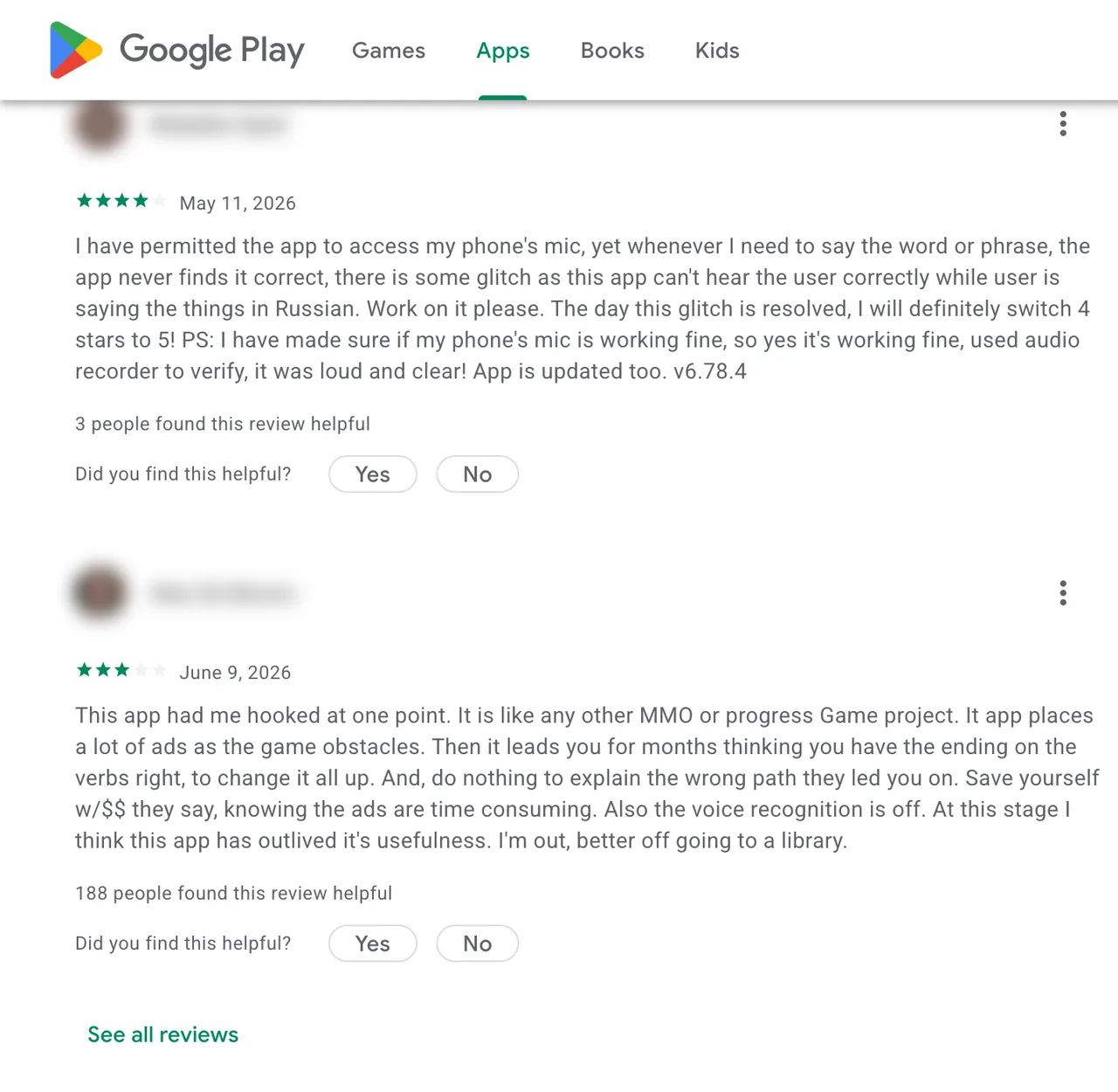
The most honest objections are rarely in your own support inbox, because the people who email you already bought. The unfiltered doubt lives where strangers talk to strangers:
- ✓Reddit threads where someone asks "is X actually worth it?" and gets answered without a filter
- ✓Amazon two and three-star reviews, where buyers explain what almost stopped them or what let them down
- ✓TikTok and Instagram comments under competitor ads and organic posts, full of "does this actually work or is it another..."
- ✓YouTube comments under review and unboxing videos, where the objection and its rebuttal often sit in the same thread
- ✓Google and niche review sites for the specific, local, or service-shaped complaints
One move most founders skip: read your competitors' negative reviews, not just your own. The objection a rival fails to answer is your positioning.
A working objection taxonomy for ecom
Five buckets cover most of what you will find. Tag every comment you collect into one of them:
- ✓Price and value. "Too expensive for what it is," "found it cheaper elsewhere," "not sure it is worth it."
- ✓Trust and proof. "Sounds like a scam," "the reviews look fake," "does it actually do what it says."
- ✓Fit and suitability. "Will this work for my hair type, my dog, my skin," "I am probably not the target customer."
- ✓Effort and friction. "Looks complicated to set up," "not another subscription," "I do not have time for this."
- ✓Timing and priority. "Maybe later," "I already have something that mostly works."
Keeping the taxonomy small is the point. Five clear buckets that every comment falls into beats twenty overlapping ones you argue about.
How to rank objections so you answer the right one first
Not every objection deserves an ad. Rank them on two axes and act on the top of the list:
- ✓Frequency. An objection echoed across dozens of comments is a category-wide belief, not one grumpy buyer. Volume tells you it is worth spending creative on.
- ✓Proximity to purchase. An objection that appears in "I was about to buy but..." comments outranks a vague early-stage worry. Closer to the checkout means closer to the money.
The objection to answer first is the one that is both common and close to the purchase. That is usually not the cleverest objection or the most emotional one. It is the boring, repeated blocker that quietly caps your conversion rate.
Turning one objection into ad creative
Once you know the top objection, the creative has a shape. For each objection, write three parts:
- ✓Hook: name the objection in the customer's own words. "I almost returned it in the first week."
- ✓Turn: resolve it with proof, not adjectives. A specific result, a guarantee, a side-by-side, a number.
- ✓CTA: lower the stakes on the exact friction the objection raised. Free tier, no card, cancel anytime, money back.
Worked example, effort objection: hook, "I thought setting this up would eat my whole Sunday." Turn, "It read the page and handed back ranked results in about a minute." CTA, "Try it free, no account needed." Same skeleton works for a price or trust objection; only the proof changes.
How Adlicio compresses the collect-and-tag step
The manual version of this works and costs nothing but time: read the threads, copy the doubtful lines, tag them into buckets, rank them. The catch is that doing it by hand, every week, across five platforms, is the task most founders quietly abandon after two sessions.
Adlicio is built to compress that step. It scrapes real customer comments from Reddit, Amazon, Google Reviews, TikTok, Instagram, and other platforms (30+ sources), then ranks what it finds into angles, objections, and hooks, so the objection tagging arrives already sorted instead of sitting in a spreadsheet. It runs as an MCP connector inside Claude, ChatGPT, Perplexity, Grok, and Le Chat, or as a CLI tool, so the ranked objections land in the same place you draft copy. More than 1,000 founders and operators use it today, alongside 7,500+ browser-extension installs, and the platform has collected over 7.2 million real customer comments across 87,000+ scrapes.
FAQ
What is a customer objection in ad messaging? It is any reason a buyer hesitates or decides not to purchase, expressed in their own words. In ad messaging, the goal is to surface the most common objections and answer them inside the creative, ideally before the viewer consciously raises them.
How is an objection different from an angle or a hook? An angle is a reason to buy. A hook is the opening line that delivers an angle. An objection is the reason not to buy that you pre-empt. Strong campaigns pair the two: lead with the objection the buyer feels, then resolve it into the angle you want to sell.
How many comments do I need before an objection is real? A few hundred per platform is usually enough to separate a pattern from an outlier. What matters more than raw volume is repetition across sources: an objection that shows up on Reddit, in Amazon reviews, and under TikTok comments is a real blocker, not a mood.
Should I mine my own objections or my competitor's? Both. Your own reviews tell you what almost lost the sale after someone found you. Your competitor's negative reviews tell you the objection an entire category has failed to answer, which is often the cleanest positioning available to you.
Can I answer more than one objection in a single ad? Usually no. One ad, one objection. Stacking objections dilutes the message and makes the test unreadable, because a losing ad no longer tells you which doubt failed to land. Give each top objection its own creative.
Key takeaways
- ✓Benefit-led ads say what you want to say; objection-led ads answer the doubt the buyer already has, which is why they convert colder traffic.
- ✓The most honest objections live in public comments and negative reviews, not in your support inbox.
- ✓Sort every objection into five buckets: price, trust, fit, effort, and timing.
- ✓Rank objections by frequency and proximity to purchase, then answer the common, close-to-checkout one first.
- ✓Give each top objection its own ad with a three-part shape: name it, resolve it with proof, and lower the stakes in the CTA.
Next steps
Pick one product you are actively running ads for. Pull thirty of the most specific comments and reviews about it or its category, tag each into one of the five objection buckets, and count them. Take the bucket with the highest count that also shows up near the point of purchase, and write one ad that names that objection in a real customer's words and resolves it with proof. If you want the collect-and-tag step done in minutes across 30+ platforms instead of an afternoon in a spreadsheet, run the same product through Adlicio and compare its ranked objections against your manual pass.
About the author
Daniel is the founder of Adlicio. He builds the scrapers behind it and uses them daily to turn customer comments and reviews into ad angles.