A testimonial ad is a paid ad that uses a real customer's words as the reason to believe, and in live ads those words most often come from a person on camera (30%). We pulled 250 live US ads from Meta's Ad Library in September 2026 and kept 112 distinct testimonial creatives from 98 brands. Then we measured where each quote sits and how long it is, and checked 21 quotes against the brands' own reviews. Guides show famous campaigns and rarely say whether they ran for long.
What we found
✓A person on camera is the most common format, in 30% of live testimonial ads.
✓10 of the 16 ad quotes we could check matched a real review on the brand's own site.
✓The typical written quote in a live ad is 24.5 words, longer than the strictest rules.
✓Only 3 of 94 written quotes contain any criticism, though guides say flaws build trust.
✓Searching "verified buyer" in the Ad Library returned 27 customer testimonials in 27 results.
✓Popular phrases mislead: only 7 of 28 top "game changer" results were customer testimonials.
Where the customer's words sit in 112 live testimonial ads
We sorted every testimonial creative by where the customer's words appear. A creative counts once, even when a brand runs it across many ads. Days live runs from an ad's first day to September 23, 2026.
Where the quote sits
Creatives
Share
Brands
Median days live
Live 90+ days
Person on camera (UGC or talking head)
34
30%
32
131
26 of 34
Quote only in the ad copy
29
26%
28
117
21 of 29
Designed quote card
19
17%
15
155
13 of 19
Catalog ad, quote in copy or card text
18
16%
17
123
11 of 18
Review or comment screenshot
11
10%
10
180
8 of 11
Other (a mascot reads a review)
1
1%
1
58
0 of 1
All
112
100%
98
130.5
79 of 112
Grouped, the quote is on the image in 30 creatives (27%), only in the words around the image in 47 (42%), and spoken on camera in 34 (30%). If you only make quote cards, you are building the smallest of the three groups.
This counts survivors, so it does not prove that a placement makes an ad last, and the card and screenshot groups are small (19 and 11 creatives).
The one larger figure we found is VibeMyAd's. It says it analyzed 47,392 ads from 1,247 brands and lists "Testimonial quotes: 28.9%" among the social proof types in ads that survived 60+ days, with no sample list or method. Ours is smaller: testimonial ads only, split by where the quote sits, measuring the quote rather than the whole ad copy, with the method below.
The longest-running testimonial ad in each placement
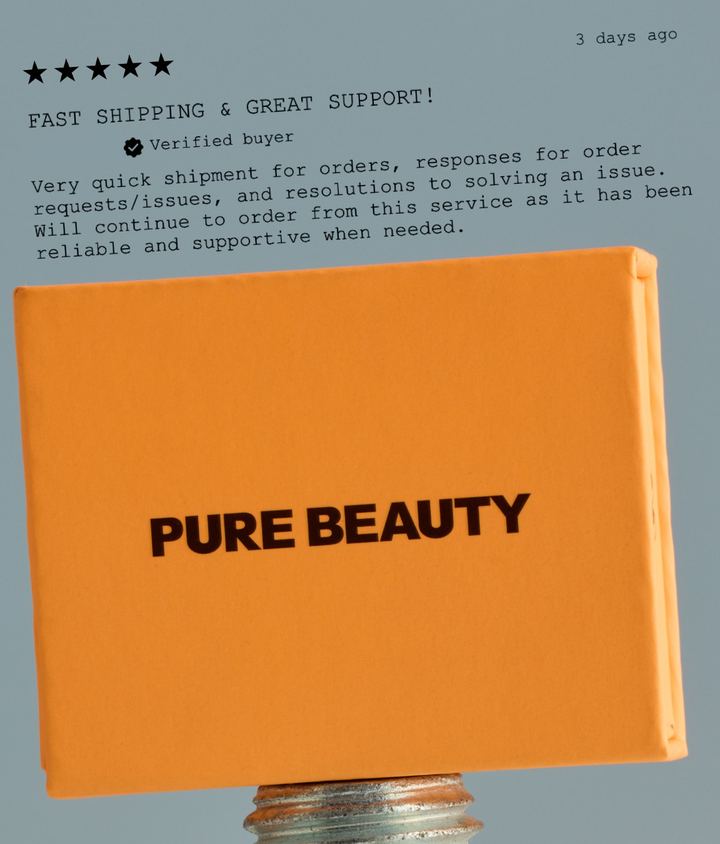
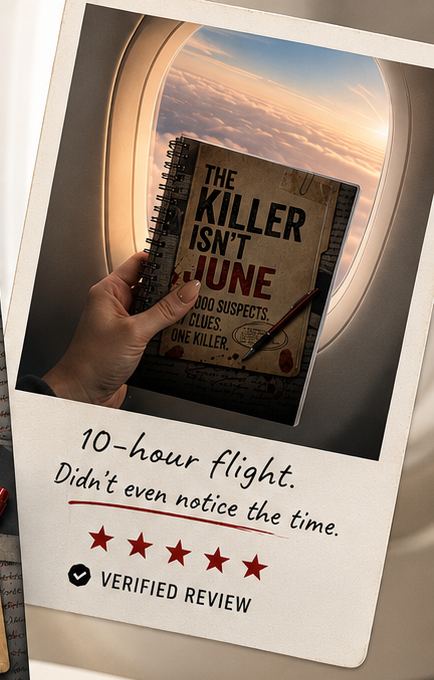
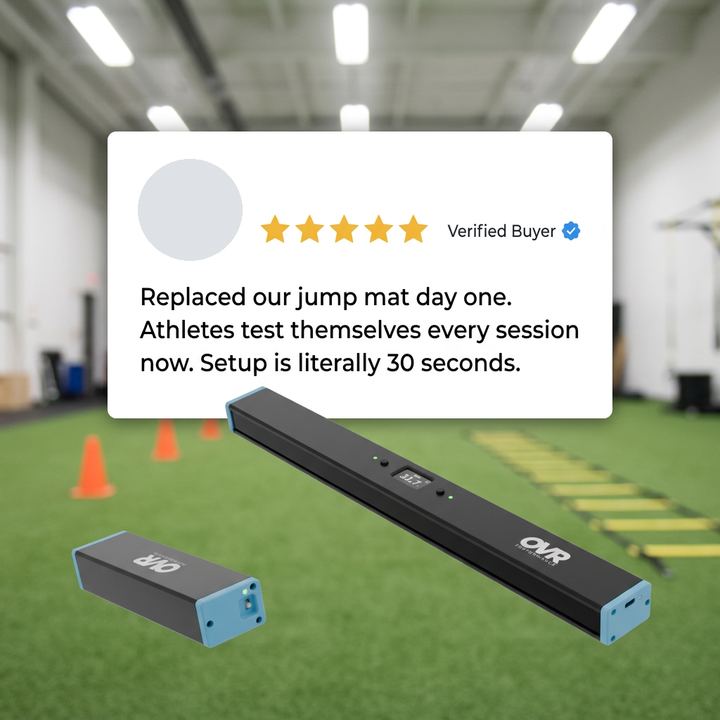
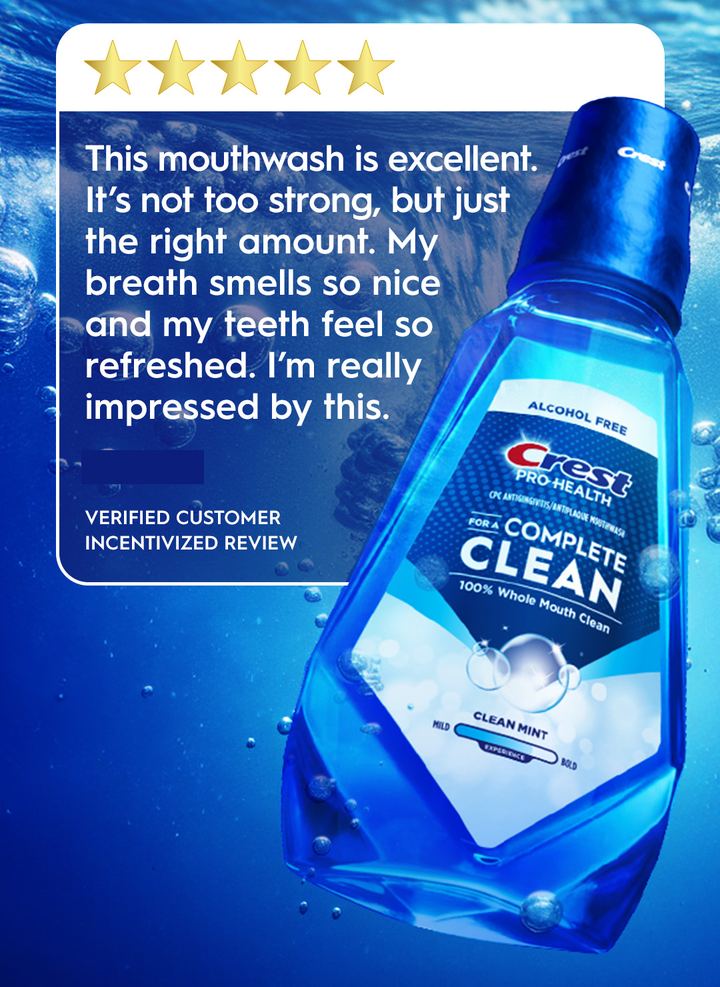
The oldest, Dan Post's catalog ad, quotes one plain review: "I've had these boots now for about 4 years. The quality is top notch." We covered reviewer names in the screenshots below. All screenshots come from Meta's public Ad Library, each linked to its ad. The brands are shown as examples of what we measured and have not endorsed this article.
Are the quotes real? 21 checked against the brands' own reviews
The guides disagree on editing. Okendo says "unedited reactions from customers" read "as more genuine", then advises "abbreviating or shortening your customer testimonies". Yotpo calls a testimonial "selected and polished". Mailchimp says "Light editing for clarity is acceptable". AddDogs says "Screenshot a real customer message; never mock one up." So we took 21 quotes from 14 brands and searched each brand's own on-site reviews for them.
Result
Quotes
Verbatim: review copied, at most punctuation changed
5
Trimmed: sentences cut, no word changed
3
Edited: words added or changed
2
Not located: the full review set for the advertised product has no match
6
Coverage unknown: the review set was incomplete or started after the ad
5
Of the 16 quotes with a clear answer, 10 were on the brand's site, and half of those were copied word for word. Among those 10:
✓Trimming is heavy: the three trimmed quotes keep 14 of 64, 17 of 35 and 18 of 84 words.
✓The reviews are old: written 64 to 1,950 days before the first ad (median 602). All are 5-star.
✓Stars travel with the quote in 6 ads, the reviewer's name or initial in 9, the review title in 1.
✓9 ads show a "Verified" label and 9 source reviews carry a verified-buyer badge, but not the same 9.
✓One source review is marked "incentivized" on the brand's site; its ad shows "Verified Buyer" and no incentive label.
Both edited quotes sit inside quotation marks (brands left out):
The review said
The ad said
"Better REM and deep when wearing, tracked using devices"
"I have better REM and deep sleep when wearing it, tracked using devices"
"so comfortable and stylish. I'll be buying more in different colors!"
"Very stylish, very comfortable. I'm getting more."
Goon Guard's ad copies a Verified Buyer review word for word: "My daughter absolutely loves it, said it's very comfortable and didn't mind wearing it as opposed to the other guards she's in pain or uncomfortable and hating every minute of it." (ad). Lectric (ad), Kevin Junior, with a 128-word review in full (ad), and Quick Covers (ad) do the same.
"Not located" means only that the brand's public widget does not show that text today. The quote may come from Amazon, an email survey or a review that was later removed.
For information, not legal advice: the FTC's Endorsement Guides say an ad "need not present an endorser's message in the exact words of the endorser unless the advertisement represents that it is presenting the endorser's exact words, such as through the use of quotation marks." The endorsement also may not be "reworded so as to distort in any way the endorser's opinion or experience with the product" (16 CFR 255.1(b)).
How long is a testimonial? 94 live quotes and 41 videos
Five guides (Okendo, Yotpo, Verblio, Mailchimp, AddDogs) give five length rules, and none measured a live ad. We counted the words in 94 distinct customer quotes from 72 brands, and the seconds in 41 person-on-camera testimonial videos from 32 brands.
What a guide says
What the 94 live quotes show
AddDogs: a static quote of "roughly 20 words or fewer"
Quotes on the image: median 18 words; 18 of 31 are 20 words or fewer
Okendo: a paid social ad "would only be able to handle a few words"
All quotes: median 24.5 words; 41 of 94 are 20 words or fewer
Yotpo: "The hook must happen in the first 3 seconds"
Speech or a caption starts within 3 seconds in 41 of 41; a face appears within 3 seconds in 35 of 41
Written quotes run longer than "a few words", but quotes on the image stay near 18. Most videos sit in the 30 to 90 second band and open with speech or a caption. Videos live 90+ days had a median of 43 seconds (29 videos), younger ones 66.5 (12). That describes surviving ads, not which length works. If you script video testimonials, draft beat-by-beat UGC ad scripts in several lengths and hold them against the 30 to 90 second band.
Mailchimp says "Numbers and statistics dramatically enhance testimonial credibility", and half the live quotes carry a number or a timeframe. It also says "Anonymous testimonials dramatically reduce credibility", yet 20 of 94 show no name, often just "Verified Buyer". Guides' advice that imperfect reviews build trust fares worst: 3 of 94 quotes contain any hedge. Mailchimp's "customers who were initially skeptical" appear in 4 of 94; that wording lives in video (next section).
16 phrases for finding testimonial ads in the Meta Ad Library
None of the five guides above mentions the Ad Library. We searched 16 exact phrases (US, active ads) and coded the first page of results for each. The second number is the first-page results left after we set supplement sellers aside.
Exact phrase
Meta's count
Date
Customer testimonials on page 1
Advertisers
"verified buyer"
15,860
Sep 23
27 of 27
18
"incentivized review"
47
Sep 27
29 of 30
7
"real review"
1,088
Sep 23
20 of 22
18
"customer review"
1,933
Sep 23
27 of 30
3
"verified review"
1,253
Sep 23
24 of 27
17
"verified customer"
8,933
Sep 23
22 of 27
8
"I was skeptical"
29,265
Sep 23
16 of 22
13
"I was hesitant"
676
Sep 27
15 of 24
13
"holy grail"
5,660
Sep 27
18 of 30
5
"5 star review"
1,571
Sep 23
13 of 29
13
"not sponsored"
2,866
Sep 27
10 of 23
10
"honest review"
3,798
Sep 23
10 of 24
8
"changed my life"
21,345
Sep 27
10 of 25
6
"game changer"
50,000+
Sep 27
7 of 28
5
"my husband"
50,000+
Sep 27
0 of 8
0
"results may vary"
30,494
Sep 27
0 of 21
0
Big counts do not mean good results. "game changer" and "my husband" both hit Meta's 50,000+ ceiling and together return 7 testimonials. On the "my husband" page, 21 of 29 results come from supplement sellers.
The phrases that name a review system work best. "verified buyer" returned only customer testimonials. "incentivized review" returned 29 of 30 from 7 advertisers, 27 of them quote cards, and every one shows its incentive label. "customer review" scores high, but 3 advertisers fill the page; to see everything one brand runs, search the Meta Ad Library by brand and see every active ad with its days live.
The misses follow patterns. "verified customer" also finds "Read verified customer reviews" feature lists (example), 11 of 29 "5 star review" results are star-average claims with no quote, and "results may vary" returns only disclaimers (example).
"I was skeptical" matches 29,265 ads, yet only 4 of our 94 written quotes use skeptic wording. On its first page, 13 of 16 testimonial results are on-camera videos: the phrase lives in speech and captions. "holy grail" (15 of 18) and "not sponsored" (9 of 10) work the same way. A rare written case, live 768 days: "I was hesitant at first to purchase a pillow shaped like a cube, but WOW!" (ad).
Counts move. Four days later, "I was skeptical" fell from 29,265 to 27,745 (-5.2%) and "verified buyer" rose from 15,860 to 16,429 (+3.6%). The first page barely changed: 28 of 30 and 27 of 28 ads were still on it.
To run these searches yourself, open facebook.com/ads/library, choose "All ads" and "United States", type the phrase in quotation marks for an exact match, filter to active ads, and open "See ad details" for the start date.
What the top guides agree on
The guides cited above agree on the basics, and most of it holds. A testimonial ad uses a real customer's words to sell, through social proof. Formats include written quotes, video, UGC and case studies, reused in ads, on the site and in email. Specific benefits beat generic praise, so ask customers about the problem they had and the result they got. Our data corrects two points: live ads rarely keep the flaws that guides say build trust, and they run longer than the strictest length rules.
To build your own, keep your best reviews in a swipe file of real customer language, tagged by the problem each one names. Adlicio is one way to fill it: it pulls verbatim customer comments and reviews from public sources (Reddit, Amazon, YouTube, TikTok, Instagram, Trustpilot, G2, the App Store and more) and groups them into pains, objections, desired outcomes and phrases for ad angles.
How we got this data
All ad data comes from Meta's public Ad Library, which shows active ads with their start date, creative and copy, but no spend or results. On September 23, 2026 we searched the 8 phrases dated September 23 in the phrase table (US, active ads): the first page of each plus a second page for two, in the default order, highest impressions first. That gave 250 unique ads from 165 advertiser pages, started between October 12, 2020 and September 16, 2026.
One coder labeled every ad from its saved images, 3 video frames and copy, using a written code book, with no second coder. We excluded 36 supplement ads (a separate article covers them), 34 non-testimonials, 8 persona advertorials, 4 creator-page posts, 2 doctor ads and 1 non-English ad, leaving 165. Ads in one Meta creative group became 154 units, and units where a brand runs the same quote in the same placement merged into 112 creatives from 98 brands (brand means landing-page domain), at most 4 per brand. One value per brand gives similar medians: 131 days for video, 122.5 for copy, 142 for cards, 120 for catalog ads, 169.5 for screenshots.
Days live is the age of a running ad at capture, not a lifetime or a sign of profit, and pauses do not show. The US Library shows commercial ads only while they run, so ads stopped early are missing, and the impressions order favors long runners. The phrases lean toward "verified" and "review", which is also why 64 of 94 quotes carry a "Verified" label.
For the verbatim audit we exported the public on-site review widget (three common Shopify review apps), matched each quote by word overlap and reviewer name, and re-checked every label against the text. "Not located" requires every review of the product the ad links to. That failed for 5 quotes: two came from a widget that showed 593 of 88,552 reviews, one store showed 2,802 of 8,519, one ad led to a collection page, and one widget's history started after the ad.
Quotes count when they carry a name, an initial, a "Verified" tag or clear review framing: one per brand per text, measured alone and dated by the longest-running ad that carries it. Video length comes from the saved files, the first spoken word from speech-to-text with word timings (about half a second accuracy), and first caption and face from frames every half second over the first 5 seconds.
On September 27, 2026 we searched 8 more phrases and re-ran two. Meta's counts are its own estimates, and a match can include text on the image or in speech. Hit rates are coded from the creative, not the copy alone. People trying a product on camera count as testimonials; disclosed creator partnerships, creators' own pages, doctors and disclaimers do not. We read the five guides linked above on September 23 and 27.
FAQ
What is a testimonial ad?
A paid ad that uses a real customer's words, written or spoken, as the main reason to believe. In our 112 live examples, the words sit on camera (30%), in the ad copy (26%), on a quote card (17%), in a catalog ad (16%) or in a review screenshot (10%).
Can you give me some examples of testimonial ads?
The long-runner table above links one live ad per placement, each running 488 to 1,321 days, and the screenshots add four more.
Are testimonial ads worth it?
A media buyer asked this in r/FacebookAds: "Did they beat your normal UGC or product ads?" (thread). The Ad Library shows no results, but 79 of our 112 testimonial creatives had run 90 days or more, so brands keep paying for them.
Can I edit a customer's review for an ad?
Brands do: of 10 quotes we located, 3 were trimmed and 2 had words changed. The FTC's Endorsement Guides treat quotation marks as a sign of exact words and bar rewording that distorts the customer's opinion. This is information, not legal advice.
What is testimonial propaganda?
A propaganda technique in which a famous or respected person endorses a product or idea so the audience borrows their trust. A customer testimonial ad differs: the speaker is an ordinary buyer describing their own experience.
Where can I see real testimonial ads, not staged interviews?
A video producer asked this in r/videoproduction and got no example links (thread). Search "I was skeptical" or "honest review" in the Ad Library: most testimonial results there are on-camera videos, though the ad rarely says whether the person is a customer or a paid creator.
Before you make your next testimonial ad, search "verified buyer" in the Ad Library for your category and note where the quote sits in the ads that have run longest.
About the author
Daniel Derzic is the founder of Adlicio. He builds the scrapers behind it and uses them daily to turn customer comments and reviews into ad angles.
SKIP THE MANUAL SCRAPING
Get the angles without babysitting a scraper.
Adlicio pulls the comments and hands you ranked angles and hooks in about a minute.
 Agencies
 E-com brands
 Coaches and creators
 Service companies
 Scrape
 Brands
 Radar
 Hooks
 Scripts
 History