 Scrape
 Brands
 Radar
Radar Hooks
Hooks Scripts
 History
How to scrape Etsy reviews
By Daniel, founder of Adlicio · 3 min read
Quick answer
Etsy's API is built for sellers, not competitor research. Here are the routes that work, plus turning a shop's reviews into ad angles in about 60 seconds.
Here is the catch most people hit: Etsy does have an official API, the Open API v3, but it is built for sellers managing their own shops, not for researching a competitor's. It is gated behind OAuth and scoped to the account that owns the shop, so it will not hand you a rival's reviews. For competitor research, the API route is effectively closed.
That is a shame, because Etsy reviews are unusually rich. They are gift-context heavy, bought this for my daughter, gave it as a gift and she cried, the personalization was exactly what I asked for, which is angle gold for handmade and personalized products. Here are the realistic ways to get that language out, ending with turning a shop's reviews into ranked angles in about 60 seconds.
★ 4.6 on the Chrome Web Store · no card needed
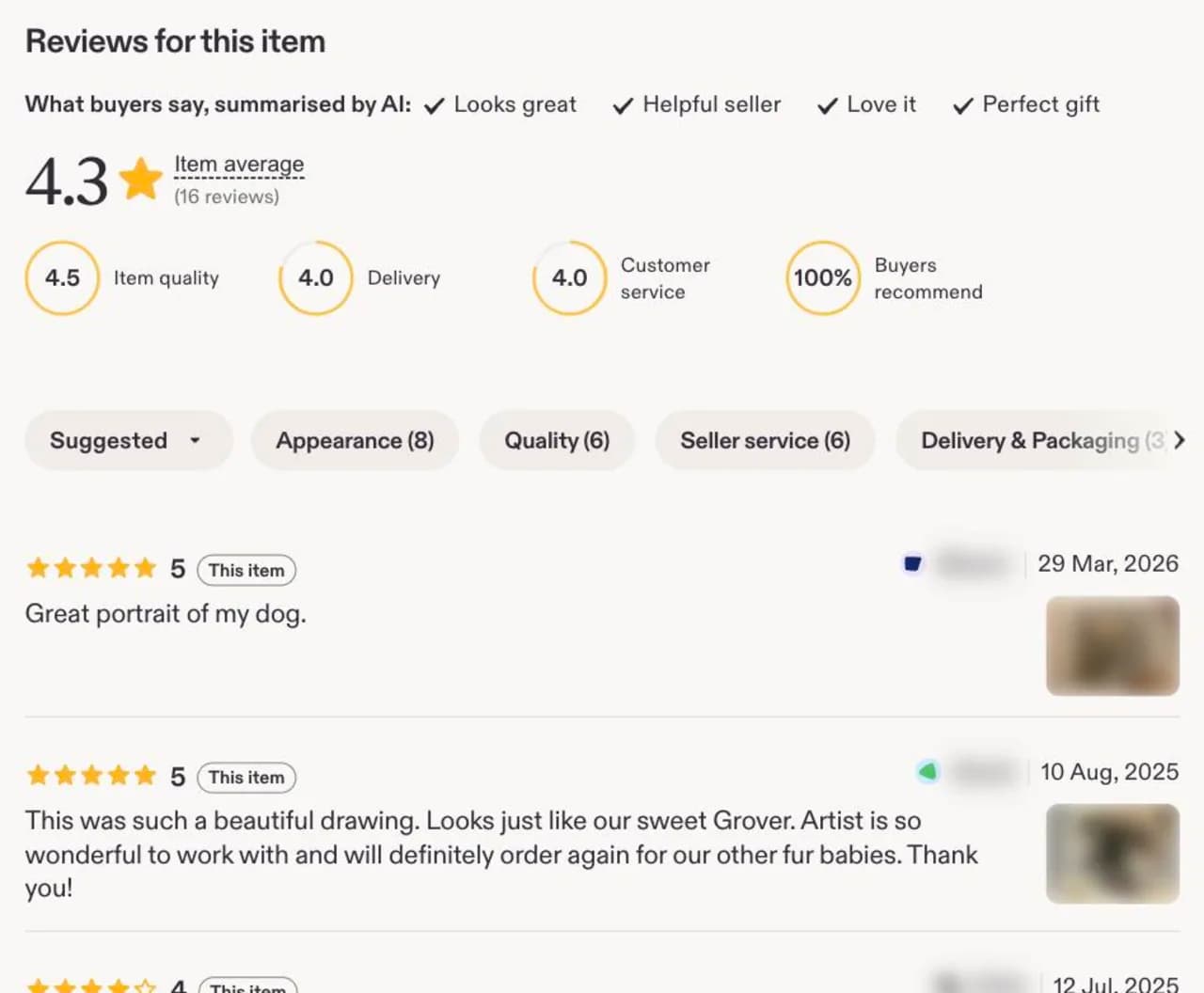
Manual collection: fine for one listing, slow for a shop
Open a listing, scroll to the reviews, and copy the ones that say something. It works for a single item. It stalls when you want a whole shop's picture: Etsy shows reviews across a shop's listings, they paginate, and the gift-context language you want is scattered. You will read the first page and miss the pattern that only shows up across a hundred reviews.
The official API is for sellers, not researchers
Etsy's Open API v3 requires registering an app, OAuth authorization, and it returns data for the shop you own or manage. There is no clean, public endpoint that returns an arbitrary competitor's reviews for research. Developers sometimes scrape the public listing and shop pages directly instead, which works until Etsy rotates markup or rate-limits the traffic, the usual maintenance tax on a DIY scraper.
The paste-a-URL route
Adlicio reads the reviews on any public Etsy listing or shop page through your own browser session, no API app, no OAuth, no code. It works across a shop's review pages, so one run spans far more than the handful shown on a single listing, and it finishes in about 60 seconds.
Then it ranks them. The reviews cluster into angles: the gifting payoff, the quality buyers did not expect, the personalization that made it theirs, and the shipping and sizing complaints to answer, each with the verbatim Etsy quotes behind it. The raw reviews stay exportable.
The 60-second version
- 01Pick the shops in your niche
Your own shop, the competitor whose listings rank above yours, and the category best-seller. Their reviews hold the gifting language and the complaints you can position against.
- 02Paste each listing or shop URL into Adlicio
Any public Etsy listing or shop page. The scrape reads the reviews across the shop's pages through your browser session in about 60 seconds.
- 03Mine the angles, keep the quotes
Work from the ranked clusters. The gift-reaction line becomes your hook, the personalization detail becomes your differentiator, and the verbatim quote becomes your proof.
Questions people also ask
Can I use the Etsy API to get a competitor's reviews?+
Not for research. Etsy's Open API v3 is scoped to the shop you own or manage and gated behind OAuth, so it will not return a rival shop's reviews. Adlicio reads the public listing and shop pages instead, the same reviews any shopper sees.
Can I scrape several Etsy shops to compare them?+
Run one scrape per listing or shop URL. Each lands in your history, so you can pull several rival shops and read their ranked angles side by side.
Why are Etsy reviews good for ad angles?+
They are gift-context heavy. Buyers explain who they bought it for and why it landed, so the ranked angles surface the emotional payoff and personalization language that handmade and personalized-product ads run on.
Can I export Etsy reviews to a spreadsheet?+
Yes. Every scrape lands in your history with a CSV export, so the raw reviews sit alongside the ranked angles for filtering.
About the author
Daniel is the founder of Adlicio. He builds the scrapers behind it and uses them daily to turn customer comments and reviews into ad angles.
More guides
Etsy scraperAll scrapersSee pricing
Run this play on your own Etsy page.
Paste one public URL. Adlicio returns the angle, hook, and proof to test next.