 Scrape
 Brands
 Radar
Radar Hooks
Hooks Scripts
 History
How to scrape Amazon reviews
By Daniel, founder of Adlicio · 3 min read
Quick answer
Amazon's API does not return review text. Here are the routes that work in 2026: manual, scripts, and pulling a product's reviews as ranked ad angles in
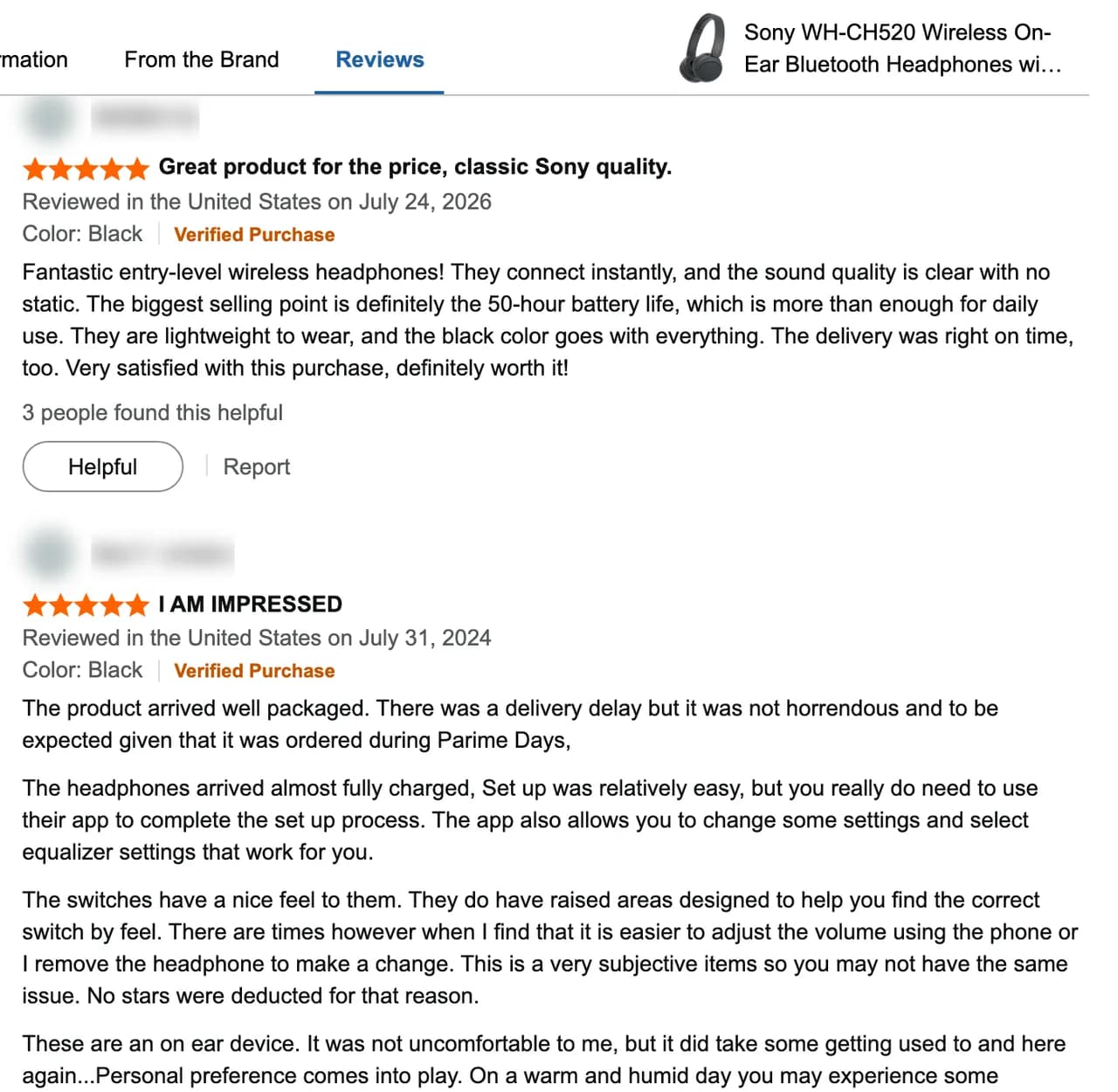
The first thing to know: Amazon's official Product Advertising API does not return customer review text, only a link to the reviews page. So the API route most people assume exists is closed, and everyone scraping Amazon reviews is reading the public product page one way or another.
That leaves three realistic options: copy reviews by hand, maintain your own scraping script, or use a tool that reads the page for you. Here is how each holds up, and the fastest path from a product URL to usable customer language.
★ 4.6 on the Chrome Web Store · no card needed
Manual collection: fine for 10 reviews, not 400
Open the product, click into the reviews, filter by star rating, and copy. For a quick gut check on a competitor this is fine. It stops working when you want the full picture: reviews paginate 10 at a time, and the language you need is spread across hundreds of them. You will read the same five top reviews everyone reads and miss the pattern buried on page 14.
Your own script: powerful, brittle
Developers can scrape review pages with Python and a parsing library. It works until it does not: Amazon rotates its markup, rate-limits aggressively, and serves CAPTCHAs to traffic that looks automated. Expect to babysit proxies and fix selectors every few weeks. If scraping is not your product, this maintenance is a tax on your actual job.
The paste-a-URL route
Adlicio takes a public Amazon product URL and returns the reviews in about 60 seconds, no script, no proxies, no API key. More usefully, it does not stop at collection: the reviews come back clustered into ranked angles, the recurring praise, complaints, and objections, each with the verbatim quotes behind it.
One-star and three-star reviews get weighted alongside the five-star ones, which matters: the negative reviews of a competitor's product are where your next ad's angle usually lives.
The 60-second version
- 01Pick the products your buyers compare
Your own listing, the category best-seller, and the competitor you lose sales to. Their reviews hold different halves of the story.
- 02Paste each product URL into Adlicio
The scrape reads the public review pages and finishes in about 60 seconds per product.
- 03Mine the angles, keep the quotes
Work from the ranked clusters: the recurring complaint becomes your hook, the verbatim quote becomes your proof line.
Questions people also ask
Does Amazon have an API for reviews?+
Not for review text. The Product Advertising API returns product data and a link to the reviews page, so any tool that gives you actual review content is reading the public page, not an API.
Is it legal to scrape Amazon reviews?+
Reading publicly visible reviews for research is generally lawful in most jurisdictions. Adlicio only captures what any shopper can see and never interacts with the listing. Republishing full reviews is a different question; use the language, not the identity.
Can I get all reviews or just the first page?+
Adlicio pages through the public review pages rather than stopping at the top ten, so the corpus reflects the whole review body Amazon serves to a visitor.
Which star ratings should I scrape?+
All of them. Five-star reviews carry your desire language, one-star reviews carry the objections and failure stories, and three-star reviews often hold the most honest comparisons.
About the author
Daniel is the founder of Adlicio. He builds the scrapers behind it and uses them daily to turn customer comments and reviews into ad angles.
More guides
Amazon scraperAll scrapersSee pricing
Run this play on your own Amazon page.
Paste one public URL. Adlicio returns the angle, hook, and proof to test next.